
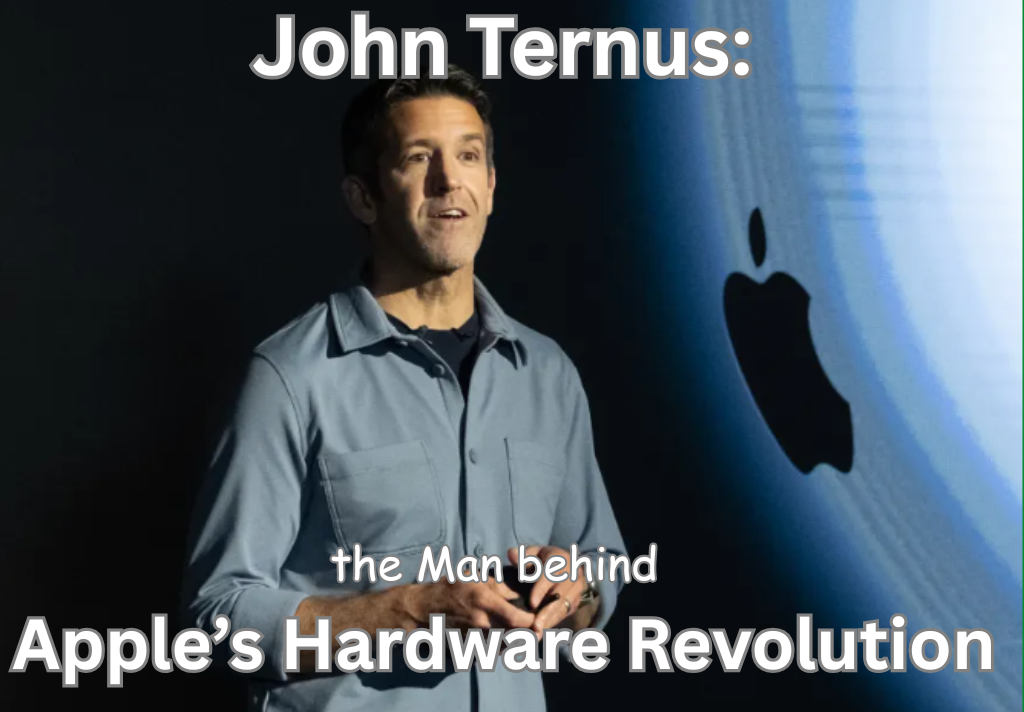
Biography of John Ternus
Introduction: The Quiet Force behind Apple’s Most Iconic Products
When you think of Apple, names such as Tim Cook and Steve Jobs come to mind. However, one executive, John Ternus, has been quietly guiding the hardware that billions of people use every day. Since 2021, Ternus has served as Apple’s senior vice president of hardware engineering, in charge of everything from the Mac and iPad to the Apple Watch and AirPods. Still, he maintains a low profile compared to other Apple executives. Because of his engineering ability and composed stage attitude, US readers who follow Apple rumors often refer to him as “the next Tim Cook.”
Early Life and Education
May 1975 marked the birth of John Patrick Ternus in California. He exhibited a keen interest in mechanics and problem-solving, frequently playing with everyday objects. In 1997, he graduated from the University of Pennsylvania with a bachelor of science in mechanical engineering after pursuing this goal academically. He took part in freestyle and medley swimming events as a varsity swimmer at Penn, showing discipline and passion for competitiveness. His final project, which demonstrated his early interest in human-centered design, was especially indicative of his inventive mindset: he created a mechanical feeding arm for paraplegics that was controlled by head movements.

Bachelor of Science in Mechanical Engineering
Career Beginnings and Entry into Apple
Ternus worked at Virtual Research Systems (1997–2001) before joining Apple, where he made contributions to the development of early virtual reality headsets and human–machine communication technologies. He now has an alternative perspective on immersive device design as a result of this interaction. He began working on the Apple Cinema Display when he joined Apple’s product design team in 2001. He was soon renowned for his engineering prowess and methodical approach. He was elevated to Vice President of Hardware Engineering by 2013 and Senior Vice President in 2021, where he oversaw Apple’s most important product lines, such as the iPhone, iPad, Mac, Apple Watch, AirPods, and Vision Pro.
Leadership Style and Influence
Ternus has kept a quiet public profile in contrast to many renowned CEOs, who prefer to let Apple’s products do the talking. He is calm, personable, and highly respected, based on his colleagues. His guidance was essential for Apple’s transition into Apple Silicon, which changed the Mac portfolio and strengthened Apple’s standing as a vertical integration. He has also frequently given speeches at Apple events, where he is renowned for his calm stage demeanor and ability to clearly explain difficult engineering achievements. Tim Cook said Ternus has “the mind of an engineer, the soul of an innovator, and the heart to lead with integrity.”
10 Lesser-Known Facts about John Ternus
1. Joining Apple at a Pivotal Moment
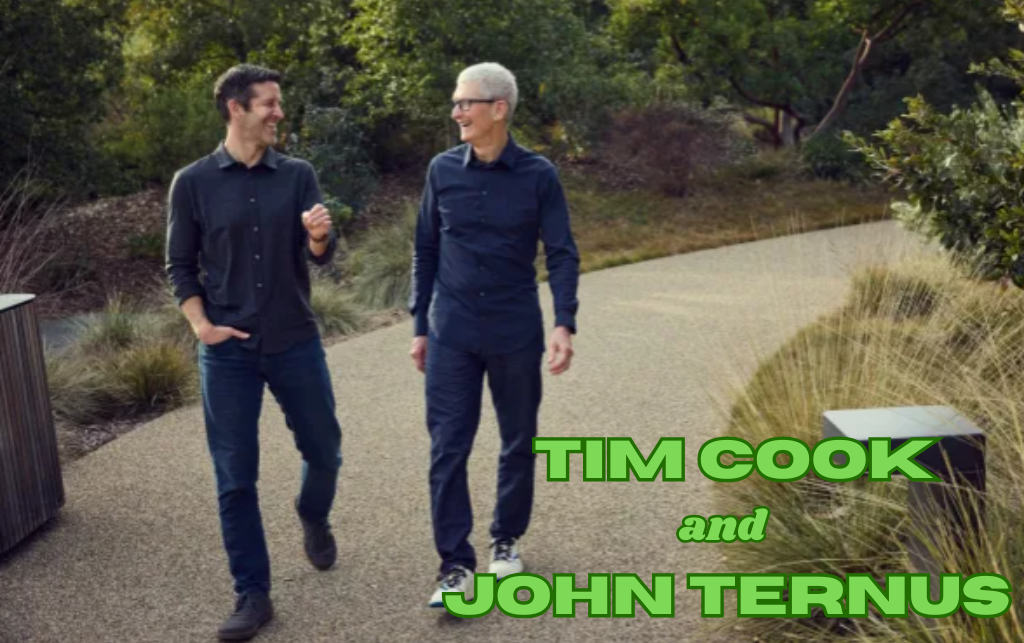
In 2001, the year the iPod made its debut, John Ternus joined Apple. Ternus was quietly taking in Apple’s design culture while the world was captivated with Steve Jobs’ introduction of the company’s music revolution. He has since earned recognition as one of Apple’s most reliable veterans, having shaped several hardware roadmaps over the past 20 years.
2. A Mechanical Engineer at Heart
John Ternus entered the University of Pennsylvania to study mechanical engineering, compared to many Silicon Valley hardware executives who have backgrounds in electrical engineering. This basis explains Apple’s fixation on industrial design, thermal efficiency, and precise fit. Every device, from the ultra-thin iPad Pro to the unibody MacBook, exhibits his mechanical strategy.
3. Architect of the Apple Silicon Transition
Rethinking air conditioning systems, enclosures, and battery design was necessary when moving from CPUs made by Intel to Apple Silicon chips. Ternus’s teams executed the ambitious two-year move planned in 2020, resulting in record-breaking battery life in MacBook Pros and silent MacBook Airs.
4. A Rare but Reliable Stage Presence
John Ternus rarely appears up during Apple keynotes, but when he does, it means a device is ready for distribution. The AirPods Max (2020), M1 iMac (2021), and Mac Studio (2022) were all announced by him in low-key, small presentations, and they all were available to customers almost immediately.
5. Champion of Accessible Pro Features
He has stood for the integration of high-end technology into everyday gadgets. The entry-level MacBook Air and the high-end MacBook Pro both launched the M1 chip at the same time, and iPad Air owners had access to Apple Silicon prior to the iPad Pro update. Apple’s market share and reach have risen as a result of this attitude.

6. Balancing Incremental and Moonshot Projects
John Ternus is in command of both long-term bets like Apple Vision Pro and annual upgrades made to iPhones and iPads. He is considered an aspiring CEO because of his distinctive capacity to achieve a balance between short-term execution and long-term innovation.
7. Calm, Data-Driven Leadership
In stark contrast to the intensity of the Steve Jobs era, former coworkers describe his product evaluations as data-driven and free of drama. During a period when competitors were actively recruiting, Apple was able to hold on to top engineering talent because of this systematic approach.
8. Successor to Dan Riccio
John Ternus succeeded Dan Riccio, who had been running Apple Hardware for 23 years, in 2021. Taking over Apple’s $200 billion+ hardware sector was an important milestone in the company’s succession planning and a clear sign of Tim Cook’s trust in him.
9. Driving Apple’s Carbon-Neutral Goals
Hardware design ingrains sustainability, transcending mere functionality. Under Ternus, Apple reduced packaging, introduced the first carbon-neutral Apple Watch in 2023, and pioneered recycled aluminum enclosures. His teams are vital for Apple’s 2030 carbon neutrality ambition.
10. A CEO-in-Waiting
John Ternus can occasionally be known as a “CEO-in-waiting” because of his over 20 years at Apple, engineering background, and command of its most profitable business. Though his reserved attitude contrasts with Steve Jobs’s charisma, he is an excellent choice for Apple’s next phase due to his creative and profitable track record.
Comparison of Apple Executives
The tasks, backgrounds, and leadership styles of John Ternus and other key Apple executives (Tim Cook, Johny Srouji, and Craig Federighi) are strongly compared in this table.
Comparison of Apple Executives
| Executive | Current Role (2026) | Background & Education | Key Contributions | Leadership Style |
| John Ternus | Incoming CEO (Sept 2026); Former SVP Hardware Engineering | B.S. Mechanical Engineering, University of Pennsylvania | Oversaw Apple Silicon Mac transition and led hardware design for iPhone, iPad, Mac, AirPods, Apple Watch, Vision Pro | Calm, data-driven, low-profile; respected for execution and long-term vision |
| Tim Cook | Executive Chairman (from Sept 2026); Former CEO (2011–2026) | B.S. Industrial Engineering (Auburn University), MBA (Duke University) | Built Apple’s global supply chain, expanded services, grew Apple to $4T market cap | Diplomatic, operationally focused, consensus-builder; strong global relationships |
| Johny Srouji | Chief Hardware Officer (2026) | B.S. & M.S. Computer Science, Technion – Israel Institute of Technology | Architect of Apple Silicon (A4 onwards), led chip design, batteries, sensors, modems | Technical visionary, silicon-first strategy, builds large engineering teams |
| Craig Federighi | SVP Software Engineering | B.S. & M.S. Computer Science, UC Berkeley | Leads iOS, macOS, and developer platforms; known for WWDC presentations | Charismatic, public-facing, energetic; balances technical depth with communication flair (inference from role and public presence) |

Legacy and the Road Ahead
Tim Cook will be succeeded as Apple’s CEO by John Ternus in September 2026, which will be the company’s second leadership change in the 21st century. His appointment symbolizes continuity and a new chapter in his more than 25 years at Apple. While his humble demeanor stands in stark contrast to Steve Jobs’ exuberant character, his past performance indicates that he will lead Apple steadily, emphasizing innovation, sustainability, and user-centric design. Ternus is the embodiment of how technological expertise, humility, and long-term vision can come along to figure out the future of one of the most valuable companies in the world, based on investors, tech enthusiasts, and aspiring engineers.
Frequently Asked Questions (FAQs)
About John Ternus
-
Q1. Who is John Ternus?
Apple’s senior vice president of hardware engineering, John Ternus, will succeed Tim Cook as Apple’s CEO in September 2026. Since joining Apple in 2001, he has shaped the engineering and design of products like the Mac, iPad, AirPods, Apple Watch, and Vision Pro.
-
Q2. What is John Ternus’s educational background?
In 1997, he graduated from the University of Pennsylvania with a bachelor of science in mechanical engineering. His professional history in mechanical engineering serves to explain Apple’s focus on industrial craftsmanship, precision, and thermal design.
-
Q3. What are his major contributions to Apple?
The toggle switch from Intel to Apple Silicon CPUs, which completely transformed the Mac lineup, was mostly made feasible by Ternus. In order to make high performance more accessible to standard users, he also campaigned for the integration of pro-level features on ordinary devices.
-
Q4. Why is John Ternus considered a “CEO-in-waiting”?
Ternus symbolizes the qualities that Apple’s board looks for in a successor, having been employed by the firm for more than 20 years, leading its most profitable division, and having a reputation for making calm, data-driven decisions. In 2026, he was appointed CEO, marking both continuity and a fresh chapter for Apple.
-
Q5. How does his leadership style differ from Steve Jobs or Tim Cook?
Ternus is recognized for his casual, uncomplicated style, in contrast to Jobs’s intensity or Cook’s operational diplomacy. He is viewed as a steady hand guiding Apple’s hardware future due to his focus on sustainability, long-term product roadmaps, and execution.
-
Q6. What role does he play in Apple’s sustainability goals?
Apple’s dedication to being carbon neutral by 2030 is heavily reliant on Ternus’ hardware teams. Under his leadership, Apple introduced its first carbon-neutral Apple Watch in 2023 and integrated recyclable materials into its products.
-
Q7. Which Apple products bear his strongest influence?
Ternus contributed nearly every major hardware advancement over the last 20 years, from the M1 MacBook Air to the Mac Studio and Apple Vision Pro.
Call-to-Action
Your Turn, Tech Enthusiasts!
Despite the fact John Ternus is not widely recognized, his influence may be visible in all of the Apple products you use today. His leadership has shaped Apple’s hardware storyline for more than 20 years, from the creative design of the Vision Pro to the silent efficiency of the MacBook Air.
It’s your time now: Which Apple product developed by John Ternus most impressed you, the Apple Watch Ultra, the AirPods Pro, or the M1 MacBook Air? Join the conversation by sharing your thoughts in the comments section below.
If you enjoyed this deep dive into Apple’s leadership, don’t miss future insights. Subscribe to our channel for weekly breakdowns of tech trends, executive profiles, and the engineering decisions that shape the devices we love.
2 thoughts on “John Ternus and Apple Inc: 10 Lesser-Known Facts about the Man behind Apple’s Hardware Revolution”