
Leo Tolstoy, Who Found True Purpose in Simplicity and Truth – Lessons Every Young Person needs today
Introduction
Why Leo Tolstoy’s Life Still Ignites Hearts in 2026
Leo Tolstoy’s life is like imagining waking up one day feeling totally empty after experiencing fame and wealth in your thirties and being born into unimaginable privilege. Leo Tolstoy was the individual in question. The author of War and Peace and Anna Karenina, one of the greatest novelists in the past, lived a life that speaks to the deepest challenges faced by all young people today: the need for purpose, the pressure to succeed, the agony of unfulfillment, and the courage to start over.
Leo Tolstoy’s life story appears shockingly relevant in a world obsessed with likes, luxury, and “hustle culture.” Leo Tolstoy’s narrative is unvarnished, touching, and extremely motivating. He was an orphaned young man, a college dropout, a war veteran, a gambler turned family man, and finally a radical spiritual revolutionary who gave up his wealth. It acts as a reminder that true success is defined by leading an honest, caring, and meaningful life rather than by wealth or status in society.
This is more than just a lesson in history. It’s a call to every young person who reads this book: what about your fears, flaws, and restless heart? These could be the very things that propel you to success. Let’s explore Leo Tolstoy’s extraordinary life and uncover the flame that burns over a century after his death.
Early Life: The Painful Roots of a Dreamer (1828–1847)
On September 9, 1828 (August 28 in the ancient Russian calendar), Lev Nikolayevich Tolstoy—later known worldwide as Leo Tolstoy—was born in the family estate of Yasnaya Polyana, about 130 miles south of Moscow. He was born into one of the most aristocratic families in Russia, the fourth of five children. His mother, Princess Mariya Volkonskaya, originated from royal lineage, while his father, Count Nikolai Ilyich Tolstoy, served in the military.
However, this privilege came with its share of heartache. When Tolstoy was only two years old, his mother passed away. When he was nine years old, his father died. He lost both his grandmother and another guardian by the time he was 11 years old. Owing in great part to his beloved “Aunt Toinette” (Tatyana Yergolskaya), who showered him with love and moral guidance, Tolstoy later recalled his childhood with extraordinary affection despite the siblings being switched between relatives.
Deep emotional scars were established by those early losses. Growing up, Tolstoy pondered everything, including faith, death, and the meaning of life. After receiving home tuition, he enrolled in Kazan University in 1844 to study Oriental languages, having chosen a career in law. But he was bored with the stiff academic world. He was referred to by teachers as “unable and unwilling to learn.” He left school at the age of 19 without earning a degree, an act of revolt that many young people today recognize when they feel that traditional education is soul-crushing.
He returned to Yasnaya Polyana, determined to improve the conditions of the estate’s serfs—Russia’s peasant class, essentially held by the landowners. However, he was still young, frustrated, and inadequate. Debts from gambling developed. In St. Petersburg and Moscow, he had chaotic gatherings. Life appeared meaningless. He had no idea that those difficult years were planting the seeds for both his eventual awakening and his future masterpieces.
Leo Tolstoy’s early challenges whisper to today’s youth facing uncertain futures: It’s acceptable to feel lost. Your “failures” could serve as the basis for something truly impressive.
Youthful Rebellion and Military Adventures: War, Writing, and First Glimpses of Truth (1847–1856)
In 1851, shattered and aimless at the age of 23, Tolstoy joined in the Russian army alongside his older brother Nikolai. They headed to the Caucasus Mountains, where he battled native tribes as an artillery officer. The challenging life suited his restless temperament well.
The Crimean War (1853–1856) began. Tolstoy witnessed the real horror of warfare when stationed in Sevastopol during its brutal 11-month battle—not the beauty glorified in poetry, but the blood, dirt, and pointless death. Despite his tremendous bravery and promotion to lieutenant, the incident shattered him. He wrote on the “appalling” waste of human life in letters and diaries.
Leo Tolstoy’s writing came to life for the first time amidst the cannon fire. His unvarnished, realistic depictions of soldiers’ lives in Sevastopol Sketches (1855) instantly made him famous. His semi-autobiographical trilogy, Childhood (1852), Boyhood (1854), and Youth (1857), was published back home. These pieces were surprisingly honest in capturing the inner life of a sensitive young man. Readers felt recognized.
Leo Tolstoy resigned from the army in 1856 after getting tired of it. He met literary giants like Dickens and Turgenev while traveling across Europe, but he became more and more disillusioned with high society. The “dissolute” aristocrat was changing. He had witnessed the brutality and courage of humanity in war. He found meaning in writing. A voice for truth emerged from the restless rebel.
Note to young readers: Tolstoy didn’t wait for approval or perfection. He literally wrote from the trenches. Your own “battlefields”—jobs, testing, and heartbreaks—may fuel your story.
Literary Triumphs: Crafting Masterpieces that Redefined Literature (1856–1877)
At Yasnaya Polyana, Leo Tolstoy composed with all of his soul. He wed Sophia Andreyevna Behrs, an 18-year-old daughter of a court physician, in 1862 at the age of 34. Their passionate obsession resulted in a passionate but turbulent engagement. As she raised their thirteen children (five of whom passed away at a young age), Sophia became his devoted editor and reproduced War and Peace by hand seven times.
With more than 500 characters, War and Peace (1865–1869) was an enormous achievement that blended philosophy, history, and personal human drama during Napoleon’s invasion of Russia in 1812. It questioned fate, free will, and the absurdity of war; it was more than just a book. It received praise as a masterpiece by critics.
Then came Anna Karenina (1875–1877), a tragic love story that explored ethics, marriage, society, and religion. “All happy families are alike; each unhappy family is unhappy in its own way” is the famous opening punishment that still has relevance. Leo Tolstoy was at the highest point of both his literary and financial achievements.
Nevertheless, something was missing. His success seemed hollow, being renowned. Despite having everything the world looked up to—wealth, family, and brilliance—he was miserable. This event was the pivotal moment that gives his story its tremendous emotional impact.
The Soul’s Dark Night: Tolstoy’s Profound Spiritual Crisis (1870s)
After finishing Anna Karenina in his late forties, Leo Tolstoy had what he later termed a “spiritual crisis.” He thought about taking his existence. Nothing made sense. “My life had come to a stop,” he wrote with brutal honesty in his masterpiece A Confession (1882). I was able to breathe, eat, drink, and sleep, but I lacked vigor.
He questioned his own privileged life, materialism, and the Orthodox Church. He studied philosophy, the Gospels, and worldwide religions. The simple faith of Russian peasants—people who, in spite of their poverty, lived with honesty, diligence, and love—provided the solution rather than lofty theories.
Leo Tolstoy abhorred private property, organized religion, and violence. He embraced Christian anarchism, which involves vegetarianism, manual work, sexual purity, and non-resistance to evil. He started giving away money, cultivating the fields himself, and looking like a peasant.
This was not a crisis of midlife. It was an awakening of the soul. The literary lion turned into a simplicity prophet. Anyone who has ever reflected, “I possess everything I need, yet I still feel so empty.” His change in form prompts this question.
Radical Transformation: Embracing Simplicity, Pacifism, and a New Legacy (1880–1910)
The final years of Leo Tolstoy’s life were revolutionary. In the 1890s, he coordinated famine relief efforts, published writings against inequality and war, and built schools for peasant children. His principles influenced Martin Luther King Jr., Mahatma Gandhi (who referred to him as “the greatest apostle of non-violence”), and many others.
Due to his conflicts with the Russian Orthodox Church, he was excommunicated in 1901. His new beliefs provoked friction in his marriage since Tolstoy wanted to give up everything, while Sophia wanted to preserve the family’s inheritance. The family’s tension escalated to a critical level.
At the age of 82, Tolstoy fled his home in secret by train in October 1910 in search of peace. At a small Astapovo train station, he became unwell. On November 20, 1910, he passed away in the company of his loved ones and fans. His final words, “Truth… I love much,” wrapped up a lifetime of seeking. At Yasnaya Polyana, he was interred simply under a mound of earth without a cross or a monument, as he had asked.
Conclusion
Tolstoy’s Timeless Message—Live Authentically, Love Fiercely, Serve Humbly
Leo Tolstoy’s life was not fully fulfilled. It was greatly human, beautiful, awful, and messy. From renowned writer to barefoot philosopher, from orphaned aristocrat to war hero, he proved that real growth comes from opposing everything and choosing love above comfort.
Because they speak to the universal human heart—the joys of family, the pain of loss, the quest for God, and the stupidity of pride—his books continue to sell millions of copies. However, you won’t find his most significant work on bookshelves. His example has changed people’s lives by giving them the guts to go after what really matters and reject what society deems “success.”
Leo Tolstoy’s story seems essential for 2026 amid social media pressure, climate anxiety, and artificial intelligence (AI). He reminds us that even though fame fades and wealth can’t purchase peace, a life of integrity remains forever.
Call to Action: Your Tolstoy Moment Waits – What Will You Choose Today?
Hello, young friend. You are precisely where Leo Tolstoy once stood if you have ever felt adrift, under pressure, or empty despite “success.” His role shows that your doubts are invitations to something more than indications of weakness.
Start simply. Please obtain a copy of A Confession or War and Peace (even just a chapter). Consider one “normal” aspect of your life, such as goals, habits, or scrolling. Be willing to help. Putting your truth in writing. Assist others who are less wealthy. Promote compassion before competition.
Leo Tolstoy did not become a legend by being careful. By paying close attention to his restless heart and acting upon it, he became one.
Which Yasnaya Polyana do you have? What call or crisis is at present at your door?
Leave a remark below: What did you find most moving about Tolstoy’s journey? Give this post to a friend who is in need of inspiration. For more inspiring stories of real heroes, subscribe.
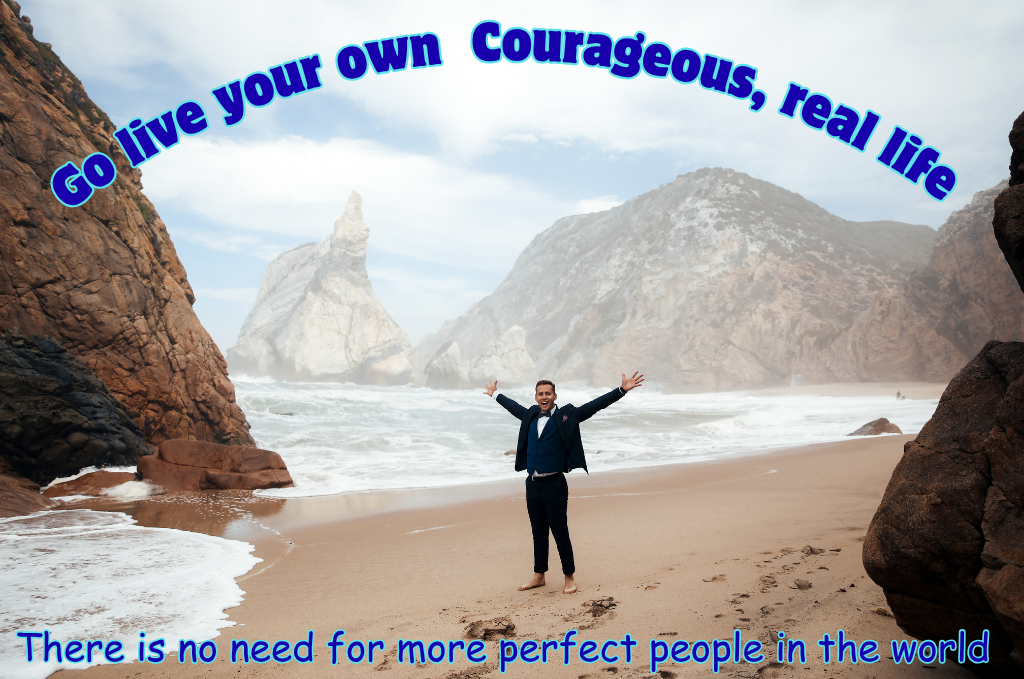
There is no need for more perfect people in the world
Above every aspect, go live your own courageous, real life. There is no need for more perfect people in the world.
More Tolstoys—imperfect, brave people who prefer the truth over luxury—are necessary.
Now is the initial stage of your journey!